

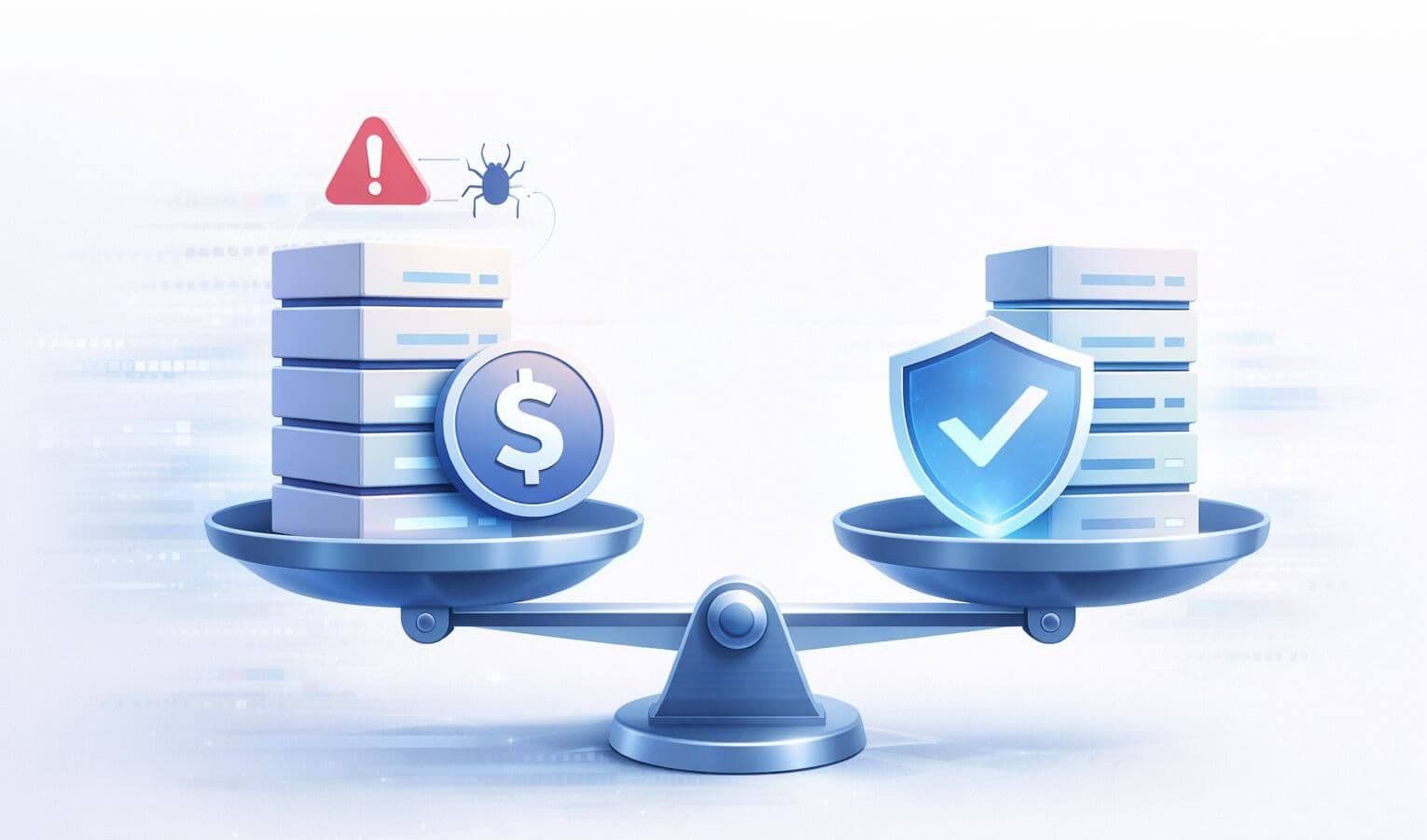
Choosing between cheap and premium proxies is not a question of right or wrong—it is a matter of security expectations, scale requirements, and cost tolerance. For teams running automation, scraping, or monitoring systems, understanding these tradeoffs is essential to building infrastructure that is both reliable and appropriate for the task.
This guide breaks down the practical security differences between cheap datacenter proxies and premium proxy solutions, so teams can make informed decisions based on real-world usage rather than assumptions.
Security in proxy usage typically refers to a combination of:
Not all projects require the same level of security. Over-engineering security can be just as costly as underestimating it.
Cheap proxies usually refer to bulk datacenter proxies offered at low per-IP cost. Their security profile reflects their design goals: scale, speed, and affordability.
Key characteristics include:
From a security standpoint, reputable providers ensure:
Most risks arise from how the proxies are used, not from the infrastructure itself. For further reading, see Are Cheap Proxies Safe? Understanding Datacenter Proxy Risks.
Premium proxy solutions—often residential or specialized IPs—prioritize stealth and reputation over volume.
Typical features include:
These proxies are designed for targets where detection tolerance is extremely low. However, this added security comes with higher cost and limited scalability.
Cheap datacenter proxies offer scale but may be classified more easily as non-residential.
Premium proxies offer stronger reputation signals but are expensive to scale. For large automation workloads, the cost of premium IPs often outweighs the security benefit.
Learn more in Are Cheap Proxies Safe? Understanding Datacenter Proxy Risks.
Security failures often stem from traffic patterns rather than IP type.
Cheap proxies require:
Premium proxies allow higher per-IP tolerance but still fail under poor traffic hygiene.
For best practices, refer to Building a Scalable Proxy Pool with Bulk Datacenter Proxies.
Security decisions have budget implications.
Using premium proxies for large-scale scraping or monitoring can:
In many cases, affordable datacenter proxies with good controls provide sufficient security without excessive cost.
Dive deeper in Affordable Proxies for Continuous Data Collection.
| Security Aspect | Cheap Datacenter Proxies | Premium Proxy Solutions |
|---|---|---|
| IP Reputation | Moderate | High |
| Pool Size | Very large | Limited |
| Cost Control | Excellent | Poor at scale |
| Best Use Case | Large-scale automation | Highly sensitive targets |
This comparison highlights why many teams adopt a hybrid strategy, using cheap proxies for volume and premium proxies only when necessary.
Cheap datacenter proxies are often the safer option when:
Security improves dramatically when proxies are deployed as part of a well-designed architecture.
Explore this topic further in Affordable Proxies for Continuous Data Collection.
Premium proxies may be justified when:
Even in these cases, premium proxies are often used selectively, not as the default.
Rather than choosing one proxy type universally, many teams design layered strategies:
This approach balances security, performance, and cost. See more in Building a Scalable Proxy Pool with Bulk Datacenter Proxies.
Security tradeoffs between cheap and premium proxies are about fit, not superiority. Cheap proxies are not insecure by default, and premium proxies are not a universal solution.
For most large-scale data operations, affordable bulk datacenter proxies provide the right balance of security, scalability, and cost—when paired with proper controls.
For comprehensive guidance, read Affordable & Cheap Proxies – Bulk Datacenter Proxies for Scale.
Jesse Lewis is a researcher and content contributor for ProxiesThatWork, covering compliance trends, data governance, and the evolving relationship between AI and proxy technologies. He focuses on helping businesses stay compliant while deploying efficient, scalable data-collection pipelines.