

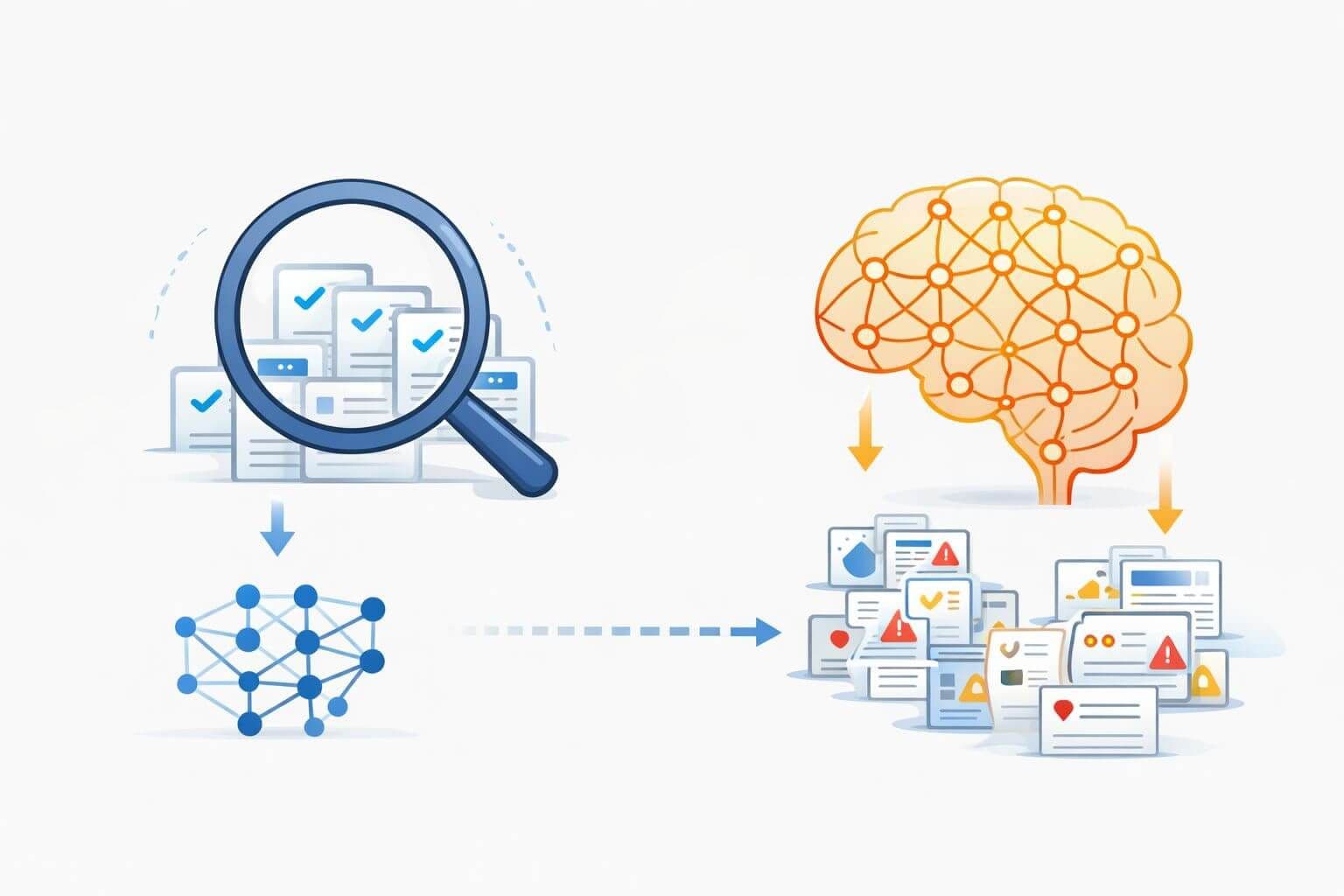
As someone who lives at the intersection of proxy networks, IP rotation, and online anonymity, I see the same misconception replayed across companies of every size: if the model underperforms, add parameters. But in practice, data quality decides who wins. Bigger models can memorize noise faster, amplify bias louder, and overfit harder. High‑quality data, by contrast, compounds returns across the stack — from better generalization to lower inference costs — and it starts with how you collect, curate, and govern the data stream.
Scaling laws are real, but they are not magic. Once you cross a threshold of model capacity and compute, returns taper unless your dataset is cleaner, more diverse, and more representative of the world you care about. In web-derived datasets, brittleness creeps in through bot walls, geo-fenced content, language skew, stale pages, duplicate shards, and mislabeled fields. Models trained on that substrate learn to be confidently wrong.
If you operate in price intelligence, ad verification, fraud detection, or brand safety — the domains where proxy servers and IP rotation are table stakes — the harsh truth is that the last 10% of data quality often determines 90% of perceived model performance.
Data quality is not a single score; it is a bundle of characteristics that determine whether your model sees reality or a funhouse mirror.
These attributes are shaped by your proxy choices, rotation policy, session handling, and crawl hygiene. Bulk datacenter proxies help streamline large-scale collection with predictable routing and throughput.
The difference between a robust dataset and a brittle one often starts at the network edge.
More requests do not equal better data.
Cleaner collection reduces silent corruption.
(Related cluster: Using Bulk Proxies with Scrapy and Selenium)
If you train classifiers or ranking models, label quality is oxygen.
(Related cluster: Why School Filters Exist)
Without deduplication, models memorize redundancy.
(Related cluster: How Many Proxies Do You Need for Large Crawls?)
(Related cluster: Are Cheap Proxies Safe?)
Track metrics like:
(Related cluster: Managing IP Reputation with Bulk Proxies)
(Related cluster: Building a Scalable Proxy Pool)
Model size is a tactic. Data quality is a strategy. When your network stack, proxy policy, and collection practices align, even small models can deliver outsized performance. In automation-heavy domains, the most reliable gains come not from more parameters, but from cleaner signals.
Nicholas Drake is a seasoned technology writer and data privacy advocate at ProxiesThatWork.com. With a background in cybersecurity and years of hands-on experience in proxy infrastructure, web scraping, and anonymous browsing, Nicholas specializes in breaking down complex technical topics into clear, actionable insights. Whether he's demystifying proxy errors or testing the latest scraping tools, his mission is to help developers, researchers, and digital professionals navigate the web securely and efficiently.