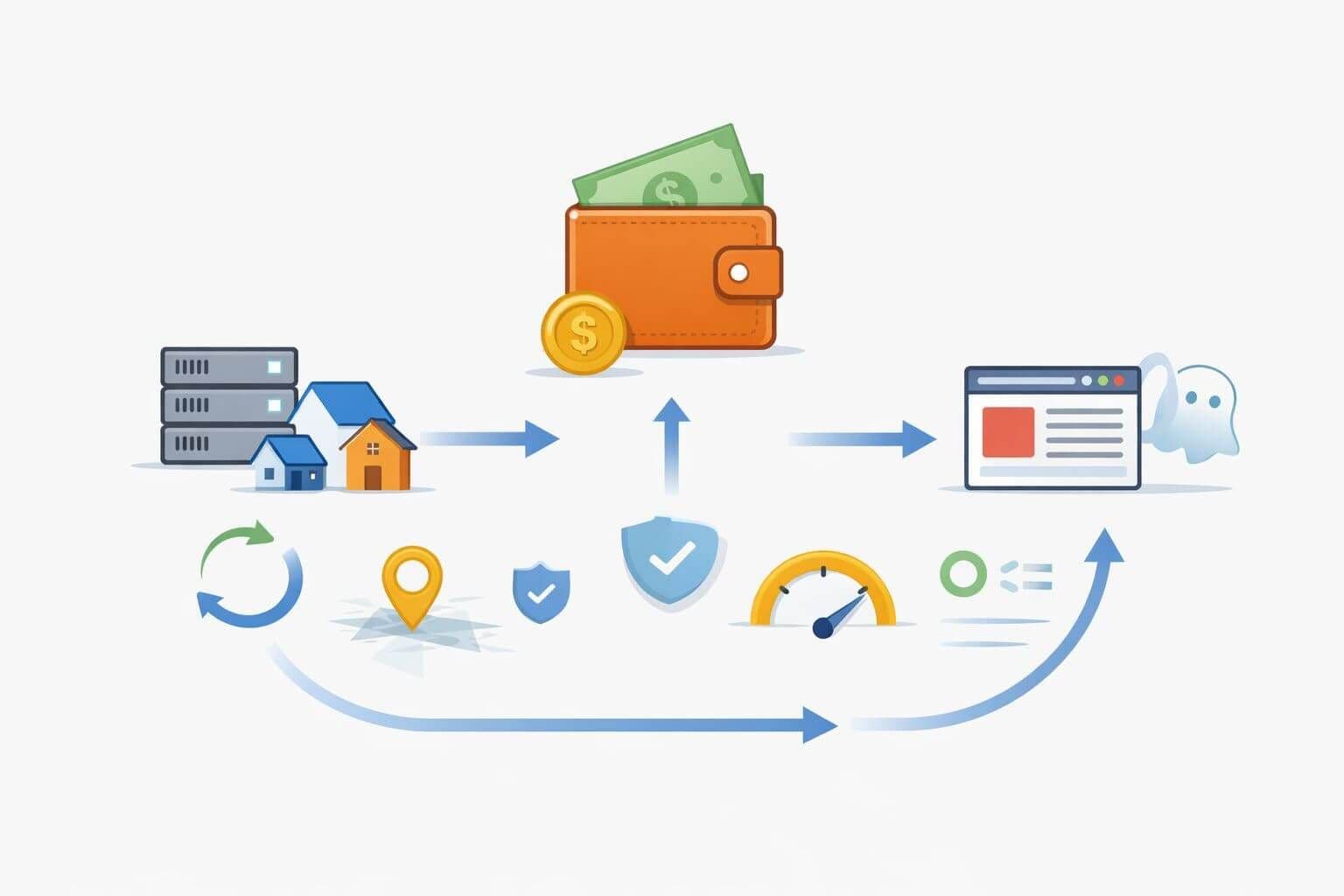
As a reporter who has watched proxy networks, IP rotation, and anti-bot systems evolve, I can say this with confidence: affordable data scraping is less about bargain hunting and more about smart engineering. Most scraping budgets get burned by bandwidth, retries, and misaligned infrastructure choices. If you pair the right proxy type with pragmatic rotation, conservative concurrency, and strong caching, you can extract high-quality data at a fraction of typical costs while staying respectful of site policies and user privacy.
What Actually Drives Scraping Costs
Affordability starts with understanding the bill. The biggest line items aren’t always obvious:
- Bandwidth: Residential proxies often bill per GB. Bloated pages, images, and repeated fetches drive costs up fast.
- Concurrency and retries: Overly aggressive parallelism triggers blocks and retry storms, compounding bandwidth and compute costs.
- Proxy quality and pool size: Underpowered pools cause higher block rates; overpaying for capacity you don’t use is just as wasteful.
- Headless rendering: Browser-based scraping is powerful but heavier on CPU and bandwidth than HTTP clients.
- Geotargeting: Country-specific IPs may cost more per GB, so only buy what you truly need.
- Operational overhead: Logging, storage, and egress fees add up at volume, especially if you move raw HTML around.
For long-running crawls, understanding the economics of affordable proxies for continuous data collection can help identify where recurring proxy costs accumulate.
Picking the Right Proxy for the Job
Choosing the right proxy tier is one of the fastest ways to reduce costs without sacrificing request success rates.
- Datacenter proxies: Cheapest and fastest. Great for non-sensitive targets, assets like sitemaps, and sites with lenient bot controls. Downsides: easier to identify as non-residential and more likely to be rate-limited.
- ISP or static residential proxies: Mid-range price with better trust profile and stability. Good for sessions that need consistency, light logins where allowed, and form workflows.
- Rotating residential proxies: Higher cost per GB but strong acceptance on tougher sites. Best when you need broad coverage without managing your own rotation logic.
- Mobile proxies: Most expensive; use only when mobile-only content or carrier IP trust is essential.
The comparison between cheap and expensive proxy infrastructure is most useful when pricing is evaluated against target difficulty, success rate, and total operating cost.
Choosing a Rotation Mode
Rotation modes matter, too:
- Per-request rotation: Maximizes distribution across IPs but can break session-dependent flows.
- Sticky sessions: Hold an IP for a few minutes to complete a workflow; reduces handoffs and risk of triggering additional checks.
Finally, demand transparency from providers. You want documented sourcing, clear acceptable use policies, and options to scope geos ethically and legally.
IP Rotation on a Budget
Effective rotation minimizes blocks and retries, reducing wasted bandwidth.
- Calibrate session length: For static pages, per-request rotation is fine. For cart or multi-step flows, use sticky sessions of 1–10 minutes. Refresh on repeated transient errors.
- Use backconnect gateways: They simplify rotation by routing through a managed pool, so you manage fewer endpoints.
- Balance pool size with concurrency: Too little diversity at high concurrency raises collision rates; too much pool depth you never touch is wasted spend.
- Graceful backoff: When a site signals strain (429, consistent 5xx), back off and try later. It’s cheaper than hammering and getting blocked.
Estimating how many proxies a large crawl actually needs can prevent both under-provisioning and paying for unused capacity.
Keep it responsible: if a target offers an official API or clear rules on access, follow them. Don’t attempt to bypass logins or protective walls you’re not permitted to access.
Architecture Patterns That Save Money
A frugal pipeline is engineering, not magic.
- Prefer HTTP clients first: Use a lightweight HTTP client for static or semi-static pages. Bring in headless browsers only when you need dynamic rendering.
- Cache aggressively: Respect ETag and Last-Modified. Use conditional GETs so you fetch only deltas. Cache robots.txt and sitemaps.
- Trim the payload: Request only what you need. Use Accept-Encoding for compression. Avoid fetching images, ads, and heavy scripts when possible.
- Normalize early: Parse and deduplicate as soon as data arrives to avoid storing and moving duplicate HTML.
- Queue and schedule: A job queue with idempotent tasks helps smooth traffic, prevent bursts, and control spend.
- Separate fetch and parse: Storing lean raw responses for a short window lets you re-parse without refetching when schemas change.
- Serverless judiciously: Great for bursty workloads, but watch cold starts and per-invocation costs. Keep function packages slim.
Budget-Friendly Scraping Setups
Shoestring: Under $50 per Month
- Targets: Public pages, sitemaps, product listings with light controls.
- Stack: A Python HTTP client or Scrapy, a simple scheduler, and an affordable datacenter proxy pool.
- Tactics: Cache sitemaps, use HEAD or conditional GET, and parse incrementally. Budget bandwidth.
- When it gets tough: Add a small residential proxy bucket instead of switching everything.
Growth: Under $200 per Month
- Targets: Mixed sites, some requiring JS rendering.
- Stack: HTTP client + Playwright. Datacenter for easy pages, rotating residential proxies for harder ones.
- Tactics: Use sticky sessions, limit geotargeting, prefer HTML over full browser runs. Respect any offered APIs.
Production: Under $1,000 per Month
- Targets: Frequent updates, multi-region, large catalogs.
- Stack: Managed rotating gateway, scraping API with optional rendering. Advanced queue, monitoring, and cost controls.
- Tactics: Measure cost per record, dynamically switch render mode, assign budget per domain.
Monitoring Costs and Success
You can’t manage what you don’t measure. Track:
- Success rate: Percentage of parseable, correct records.
- Cost per record: All-in cost ÷ successful rows.
- Median TTFB and bytes per record: Identify heavy targets.
- Error taxonomy: Split 4xx, 5xx, and network errors.
- Vendor health: Monitor latency and failure rates.
Set guardrails: bandwidth caps, concurrency limits, domain ceilings, and circuit breakers.
Legal, Ethical, and Privacy Essentials
Affordability should never come at the expense of compliance. Respect robots.txt, terms of service, and offered APIs. Avoid scraping personal data unless legally permitted. Log access, limit retention, and audit regularly. Sometimes, data licensing is a cleaner and cheaper option.
Vendor Evaluation Checklist
Before you commit:
- Pricing model: GB vs request, and what counts.
- Rotation: Session support, sticky IPs, timeout configuration.
- Geo coverage: IPs from needed countries or cities.
- Authentication: IP allowlists, token-based authentication, or basic auth.
- SLA: Uptime guarantees and support response.
- Logging: Request-level logs and dashboards.
- Compliance: Ethical sourcing and documented policies.
- Trial/refunds: Test real workloads before scaling.
Final Take
Affordable scraping isn’t about cutting corners. It’s about alignment.
Match easy targets with datacenter proxies, reserve headless browsers for the workloads that genuinely require them, and monitor cost per successful record closely.
With appropriate proxy infrastructure, efficient rotation, caching, and disciplined concurrency controls, scraping costs can remain predictable even as collection volume grows.
Teams comparing infrastructure options can review affordable datacenter proxy pricing based on pool size, expected traffic, and workload requirements.