

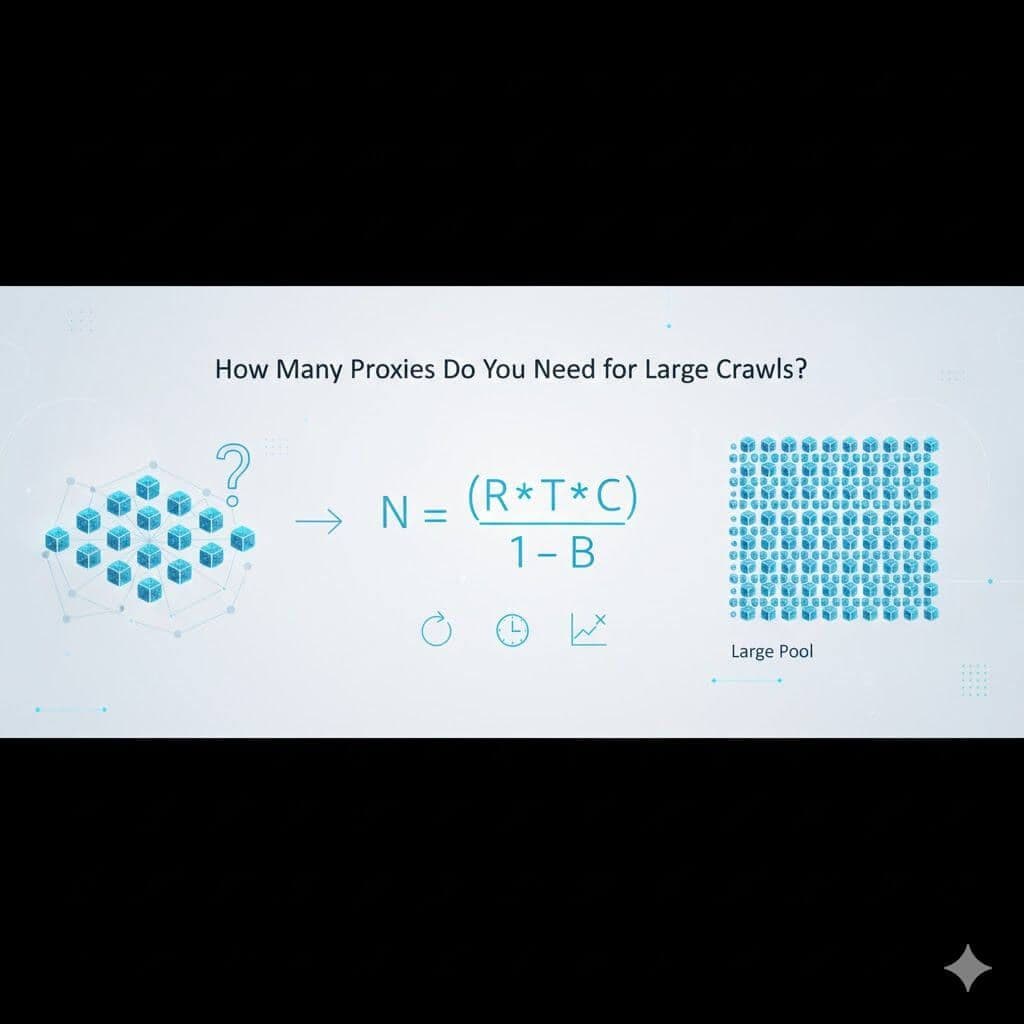
One of the most frequently asked questions in scaling data collection infrastructure is: how many proxies do you actually need for large-scale web crawls? Rather than relying on guesswork, the right answer comes from understanding your traffic goals, site-specific tolerance levels, and how your crawl frequency aligns with proxy reuse cycles.
For organizations leveraging bulk datacenter proxies, correctly sizing your proxy pool is essential—not just for avoiding bans, but for optimizing throughput, stability, and total cost of ownership.
In high-volume crawling operations, proxy pool size plays a central role in:
If your pool is too small, traffic density on each IP rises—resulting in faster bans and crawl failures. On the other hand, using too many proxies can increase cost without adding measurable value. The sweet spot lies in balancing risk, cost, and performance.
Your total request count per session or day is the most obvious baseline. Distributing 1 million requests across 100 proxies means 10,000 requests per IP—a red flag for many sites.
To reduce footprint:
Related: Scraping With Proxies Setup Guide
Is your crawl a one-off, or recurring hourly or daily? Repeated access to the same domains means your proxies must remain below detection thresholds over time.
In continuous pipelines, larger pools help:
Explore Affordable Proxies for Continuous Data Collection
Every website has its own bot defense posture. Some tolerate moderate scraping; others aggressively block even low-volume access.
Proxy pool size should reflect:
For sensitive targets, consider escalating from datacenter to classified proxies only when needed.
Lightweight JSON calls are easier to scale than browser-based scraping of dynamic pages.
Headless automation adds:
These factors justify larger proxy pools, especially when using tools like Playwright or Puppeteer.
Related: Headless Browser vs HTTP Client
Instead of hardcoding IP counts, follow a test-and-adjust methodology:
Related: Managing IP Reputation with Bulk Proxies
Datacenter proxies provide:
They are perfect for workflows like ecommerce monitoring, brand protection, and large product feed indexing.
Explore Bulk Datacenter Proxy Plans
Expand your proxy pool if you observe:
In many cases, increasing pool size is cheaper and more effective than switching proxy types or throttling crawl speed.
There’s no universal answer to how many proxies you need—but there is a clear methodology. Start with request volume, assess target behavior, measure block feedback, and grow your proxy pool in parallel with crawl scale.
Affordable bulk datacenter proxies allow teams to expand capacity without overpaying or introducing unnecessary complexity.
Looking to scale smartly? Get started with ProxiesThatWork.com and build crawl infrastructure that adapts to your needs.
Ed Smith is a technical researcher and content strategist at ProxiesThatWork, specializing in web data extraction, proxy infrastructure, and automation frameworks. With years of hands-on experience testing scraping tools, rotating proxy networks, and anti-bot bypass techniques, Ed creates clear, actionable guides that help developers build reliable, compliant, and scalable data pipelines.