

Market and competitive intelligence used to be slow, manual, and fragmented. Analysts would export spreadsheets from a few tools, ask local teams for screenshots, and hope nothing important changed overnight. Today, markets move faster than ever—and business decisions are only as good as the data behind them.
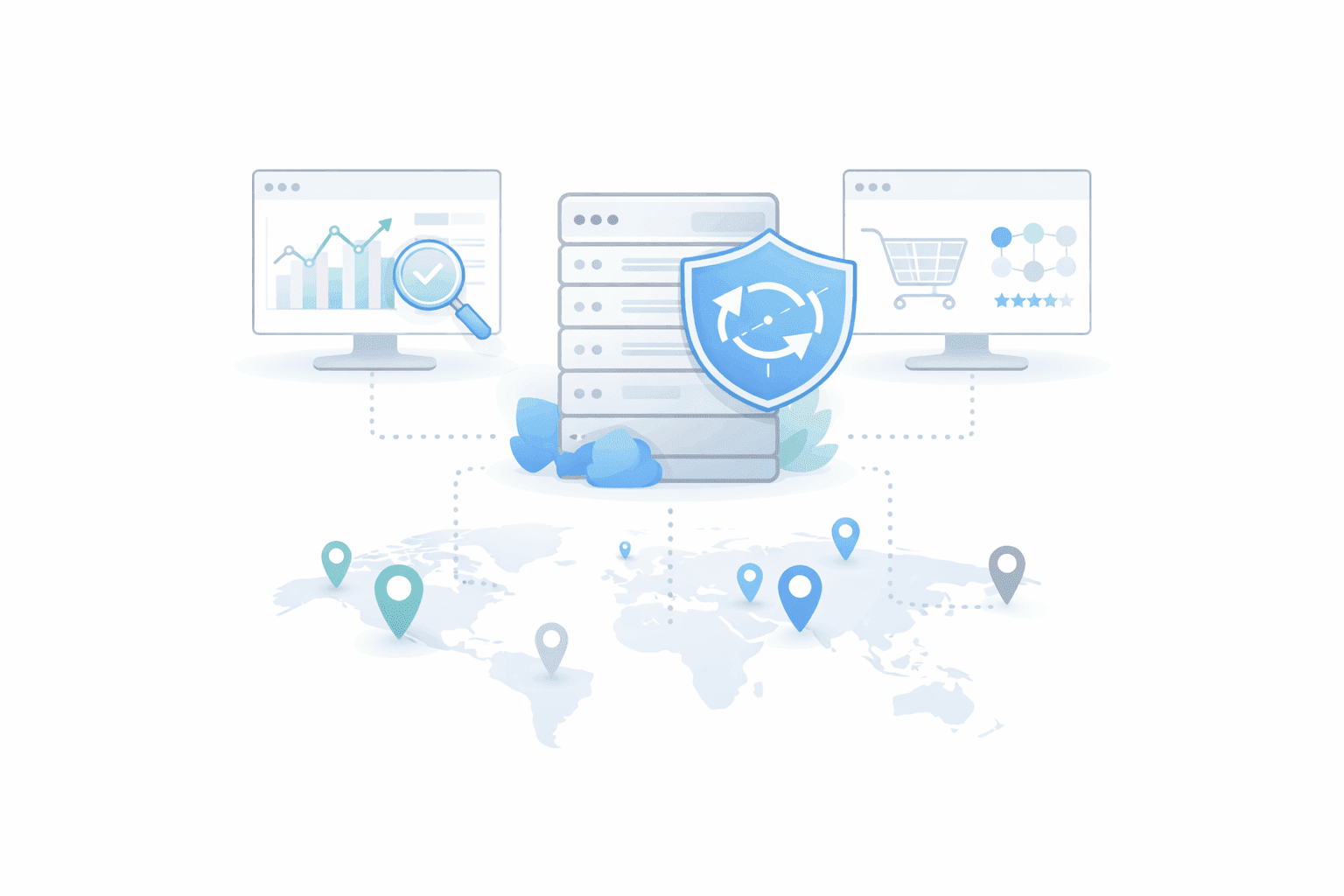
Proxies give market analysts a practical way to see what real customers see in different countries, on different devices, and in near real time. With the right setup, you can track prices, assortments, messaging, reviews, and macro signals across dozens of markets without leaving your desk.
This article explains how proxies fit into business and competitive intelligence workflows, what types of proxies make sense for analysts, and how to design reliable, compliant data collection pipelines that your team can trust.
For business intelligence teams, proxies are less about “hiding” and more about getting a truthful, consistent view of global markets.
Used correctly, proxies help you:
See localized experiences
Check how prices, promotions, and product assortments differ by country, region, or even city.
Avoid personalization bias
Reduce the impact of cookies, account history, and prior browsing behavior that can distort what you see.
Collect structured data at scale
Feed dashboards and models with fresh data from retailers, marketplaces, and review platforms.
Stress-test strategies and campaigns
Monitor how competitors change their messaging, pricing, or channel mix over time.
Protect internal networks and identities
Route automated research through controlled proxy infrastructure instead of employee laptops.
When proxies are integrated into your market intelligence stack, you get a repeatable, auditable way to capture what’s happening “out there” without relying solely on vendor reports or anecdotal local feedback.
Different teams use proxies in different ways, but most applications fall into a few repeatable patterns.
Analysts use proxies to monitor:
By routing requests through datacenter proxies in target markets, you can build time series of price and promo data that support:
(Explore related use cases in Affordable Proxies for Competitive Price Monitoring.)
For assortment and supply-side analysis, proxies help answer questions like:
Scraping category and product listing pages via proxies allows your team to map who sells what, where, and how often it changes.
Marketing and brand teams rely on proxies to see:
Because many sites personalize content by region and IP, proxies are often the only practical way to see what a first-time visitor in a given country would encounter.
(If your team runs advertising QA or campaign validation, read Proxies for Ad Verification.)
Customer feedback is a rich source of insight but often spread across multiple platforms and regions.
Proxies enable you to:
This kind of review intelligence is especially powerful when combined with text analytics and topic modeling.
Beyond product-level detail, proxies support macro-level questions such as:
(For a technical walkthrough on how proxies support this level of data infrastructure, see Build Orchestrated Scrapers Using Shared Proxy Routing.)
Not every project needs the same proxy setup. For most analysts, the goal is reliability and representativeness, not maximum stealth.
For many price, assortment, and messaging projects, dedicated datacenter proxies are ideal:
Pros
Typical use
In some cases, you may need IPs that look more like consumer traffic:
For advanced targeting and rotating IP logic, explore Rotating Residential Proxies.
For market analysts and competitive intelligence teams, proxies are not a niche technical tool—they’re a way to see the world more clearly. When integrated thoughtfully into your data pipelines, they reveal how products, prices, and messages shift across regions and channels in near real time.
The key is to treat proxy infrastructure as part of your core BI stack: governed, monitored, and designed for long-term use. With the right mix of datacenter IPs, robust code integrations, and clear internal policies, your team can move beyond one-off snapshots and build a sustainable, constantly refreshed view of global markets.
Need high-volume proxies tailored for business intelligence?
Explore dedicated datacenter proxy plans engineered for scale.
Ed Smith is a technical researcher and content strategist at ProxiesThatWork, specializing in web data extraction, proxy infrastructure, and automation frameworks. With years of hands-on experience testing scraping tools, rotating proxy networks, and anti-bot bypass techniques, Ed creates clear, actionable guides that help developers build reliable, compliant, and scalable data pipelines.