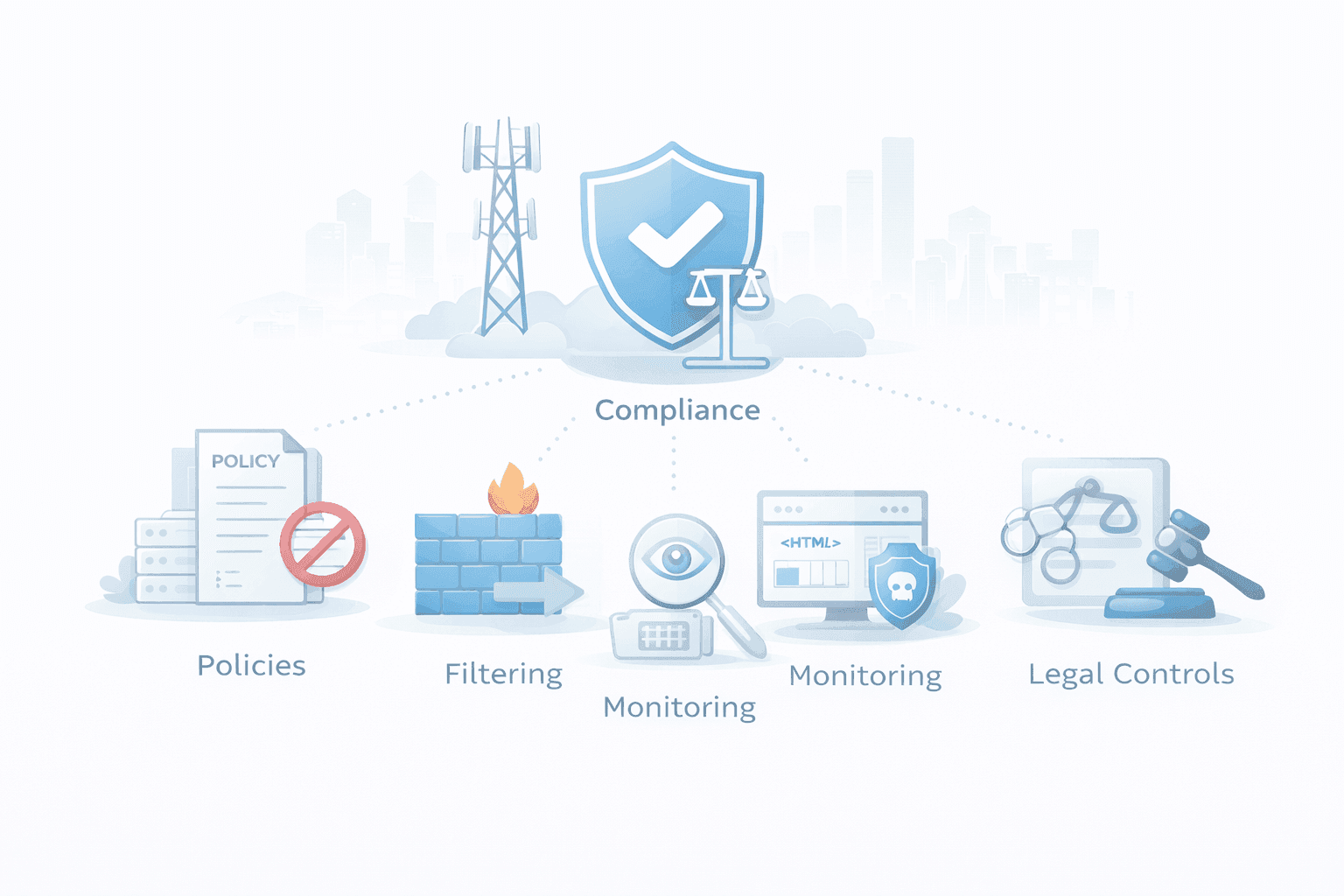
Proxy performance is no longer just a game of speed and freshness. If you operate, buy, or build proxy networks, your risk profile is increasingly defined by how well you align with the rules set by internet service providers (ISPs) and mobile carriers. From acceptable use policies to traffic shaping and lawful intercept, carriers sit at the chokepoint of your sessions. That makes compliance both a legal obligation and a resilience strategy.
This guide breaks down what ISPs and carriers restrict, how different proxy types collide with those rules, and the practical steps that keep your operation ethical, durable, and relationship-friendly.
- Carrier blocks hurt availability, increase costs, and can burn entire IP ranges.
- Reputation damage impacts upstream partners, CDNs, and target sites.
- Regulatory noncompliance can trigger audits, fines, and forced shutdowns.
- Ethical sourcing and transparent practices are now buyer differentiators.
Treat compliance as part of your reliability engineering: it reduces churn, improves acceptance rates, and protects your IP capital. (Related guide: Proxy Governance Best Practices)
What ISPs and Carriers Actually Restrict
ISPs and mobile carriers enforce overlapping controls grounded in their acceptable use policy (AUP), contracts, and local law:
- Contractual AUPs: Prohibit abuse, unsolicited messaging, credential stuffing, scraping that violates terms, infringement, and interference with network operations. Many explicitly restrict running public proxies or reselling connectivity without authorization.
- Port and protocol filtering: Common examples include blocking outbound SMTP on port 25, filtering peer-to-peer ports, or rate limiting QUIC. SOCKS and HTTP proxy traffic is not inherently blocked, but anomalous patterns can be targeted.
- Traffic shaping and fair use: Heavy concurrent connections, high SYN rates, or sustained bandwidth can trigger throttling or temporary blocks. Mobile plans may deprioritize hotspots or non-handset profiles.
- CGNAT and inbound reachability: Carrier-grade NAT prevents inbound connections and can rotate your egress IP mid-session, complicating sticky sessions and login flows.
- IP reputation controls: Carriers subscribe to reputation feeds and may null-route or quarantine abused ranges. Abuse reports from websites and CDNs propagate fast.
- Tethering and hotspot detection: Carriers look for TTL deltas, NAT fingerprints, and DHCP options that imply routing beyond the handset plan.
- Geofencing and roaming: Some regions restrict cross-border routing or impose roaming-specific rates and shaping.
For context on how proxies handle sticky sessions under CGNAT and egress churn, see How Rotating Residential Proxies Work.
The Legal Overlay You Cannot Ignore
Carrier policies operate within legal frameworks that vary by jurisdiction but share common themes:
- Lawful intercept and data retention: Providers must be able to respond to lawful requests, which can impact how traffic is logged or mirrored.
- Privacy and data minimization: GDPR, CCPA, and other frameworks require purpose limitation, minimization, and secure handling of personal data.
- Computer misuse and anti-fraud laws: Automated access that bypasses controls may constitute unauthorized access, depending on jurisdiction.
To build compliant systems from day one, refer to our Proxy Compliance for Enterprise Buyers.
How Proxy Types Intersect With Restrictions
- Datacenter proxies: Generally allowed if hosting AUPs are respected. Concurrency and traffic type can trigger filters.
- ISP-assigned residential proxies: Require documented, opt-in sourcing. Unauthorized usage is a breach of both provider terms and often consumer laws.
- Mobile proxies: Very effective but heavily policed. Tethering violations and CGNAT-induced churn are common.
- P2P and device-based: Must ensure verifiable user opt-in, easy opt-out, and clear purpose disclosure.
- Rotating/sticky sessions: Must balance rotation frequency and session fidelity to avoid detection or policy conflict.
For deeper comparisons, read Residential vs Datacenter Proxies: Which to Use When.
Technical Signals Carriers Monitor
- Excessive TCP handshakes, rapid session churn.
- Mismatched traffic vs subscriber profile.
- DNS anomalies: NXDOMAIN surges, resolver hopping.
- TLS fingerprint mismatches or domain fronting.
- Mobile: TTL deltas, user-agent/radio profile mismatches, hotspot NAT clues.
You can't fake being a normal user at scale. Instead, aim to be a respectful, predictable client. (See Proxy Rotation and Session Recipes)
A Practical Compliance Checklist
- Map provider AUPs.
- Source IPs lawfully with documentation.
- Cap concurrency per IP.
- Follow site rules and disallow directives.
- Apply geofencing logic.
- Maintain an abuse response desk.
- Log only what's necessary; define retention.
- Segment networks by type and risk.
- Run synthetic tests for shaping, blocks.
- Support IPv6 and manage rotation by /64.
Design Patterns That Play Nicely With Carriers
- Session stabilizers: Long-lived sessions reduce NAT churn.
- Adaptive pacing: Respect subscriber-type patterns.
- Reputation hygiene: Warm IPs slowly and segregate task types.
- Transparent labeling: Openness with carriers buys tolerance.
Warning Signs and How to Respond
- TCP resets/timeouts: Lower concurrency, rotate pools, log ASN impacts.
- Egress churn under CGNAT: Detect and use resumption tokens.
- Abuse spikes: Pause segments, analyze logs, notify upstream.
- Contract changes: Track updates, re-capture consents, adjust flows.
The Bottom Line
Proxy compliance is not optional. It's the substrate of a sustainable, resilient network strategy. Source ethically, shape traffic gently, and treat ISPs and carriers as partners—not adversaries. When in doubt, slow down, document everything, and build for long-term success.
For affordable, compliance-conscious infrastructure, explore our Bulk Datacenter Proxy Plans.