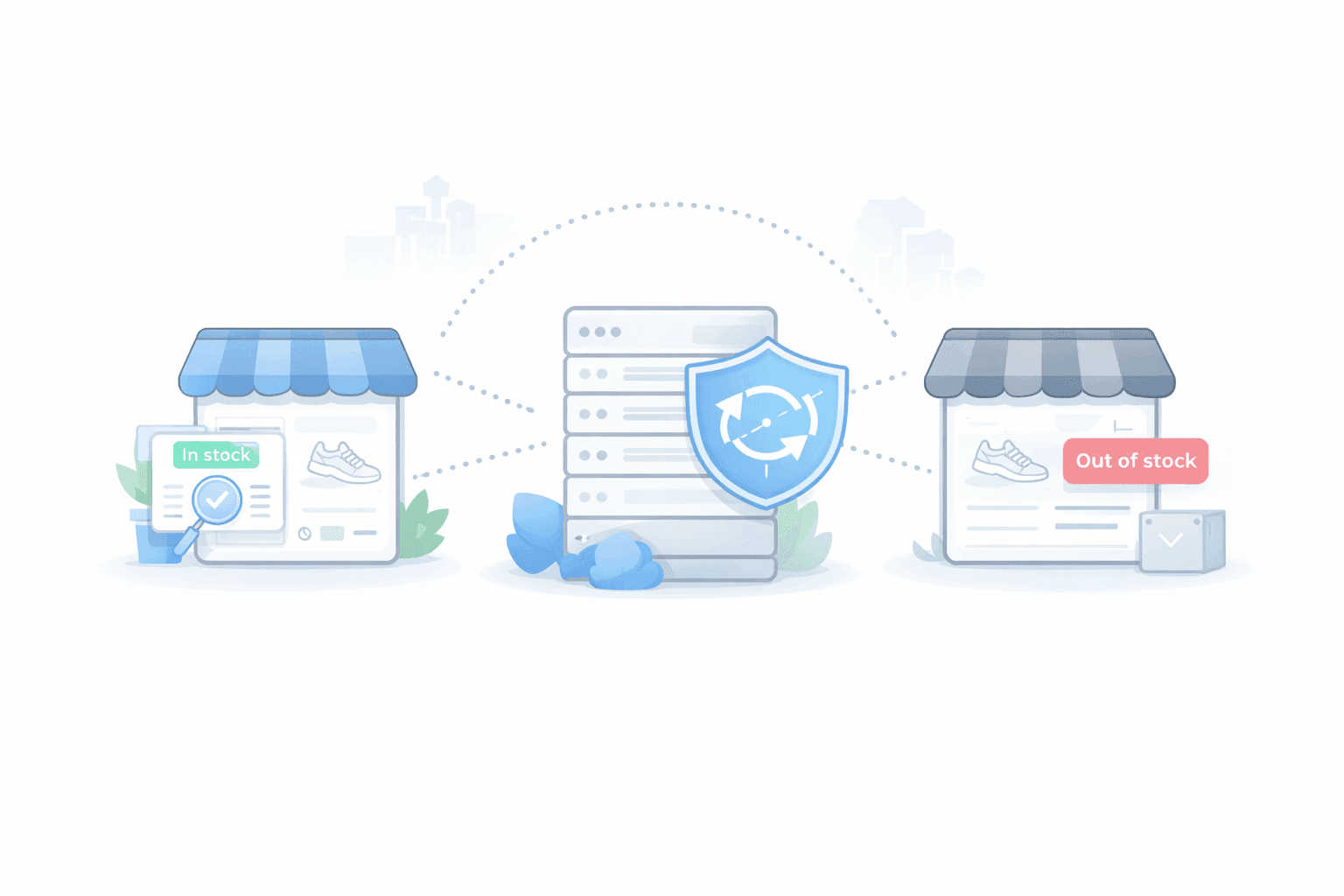
Retail is a real-time contest. If a rival goes out of stock on a top-selling SKU, your promotion can win the basket. If their curbside pickup is unavailable in certain ZIP codes, your local inventory ad can win the click. To make those calls, retailers need trustworthy visibility into competitor inventory across sites, stores, and regions. That is where proxies and IP rotation come in.
Proxies act as the connective tissue between a data collection pipeline and the outside web. They help teams fetch publicly available product and availability data without being rate-limited, mis-geolocated, or blocked for suspicious traffic patterns. Used responsibly and legally, they underpin a market-intelligence capability that guides pricing, assortment, media, and supply chain decisions.
Why Inventory Signals Matter
- Stock-outs and back-in-stock timing: Detect competitor gaps and time promotions.
- Assortment and SKU parity: Track variants, pack sizes, and exclusives by region.
- Fulfillment and pickup: Monitor BOPIS and curbside availability at the store level.
- Delivery SLAs: Compare shipping promises and lead times by postal area.
- MAP and price-matching: Validate adherence and reduce leakage.
Each of these use cases depends on fresh, geographically accurate data that reflects what a real shopper would see in a specific city or store catchment.
Where Proxies Fit In
When a retailer queries competitors directly at scale, they encounter defenses designed to protect site performance and integrity. Proxies help distribute requests, present accurate locations, and maintain session continuity so the crawler looks like normal shopper traffic.
Common Proxy Types
Most programs blend types: datacenter for catalog discovery, residential or ISP for store-level availability and checkout-adjacent steps, mobile only when a target restricts content to app-like experiences.
Rotation Strategies That Keep Traffic Natural
- Per-request rotation: Change IPs frequently to spread load and reduce patterns. Good for page-by-page scraping of broad catalogs.
- Sticky sessions: Keep an IP for several minutes when a flow spans multiple requests, such as adding to cart or fetching store availability after setting a location.
- Pool sizing: Maintain sufficiently large pools to avoid reusing the same IPs quickly, especially during peak scrapes.
- Geo targeting: Pin IPs to the city or ZIP radius used by a store availability check to match the site’s localization logic.
- Concurrency control: Pace requests per domain and per IP to avoid spikes that look like synthetic traffic.
(Related: Proxy Rotation in Python)
Beyond IPs: Signals That Affect Success
- Headers and device profiles: Use realistic user agents, languages, and accept headers that match the region you target.
- Cookies and sessions: Respect session flow and consent banners where applicable; persist cookies for sticky sessions.
- Timing and cadence: Crawl during normal shopper hours for the target region and randomize delays to reduce regularity.
- Data fallback: Prefer official APIs or feeds when available; HTML is a fallback when structured endpoints are absent.
These are not about evading security; they are about behaving like a courteous, low-impact client while collecting public data.
Where Inventory Data Comes From
- Product detail pages: In-stock flags, variant availability, delivery ETAs.
- Store locator and pickup endpoints: BOPIS inventory by store ID or postal code.
- Search and category pages: Quick-view availability and badges at list level.
- Structured data: schema.org markup sometimes includes stock status.
- Sitemaps and feeds: Help discover products without heavy crawling.
(Related: How to Avoid IP Blacklisting)
Always review the target’s terms of service, robots.txt, and legal guidance. When feasible, pursue partnerships or affiliate feeds that reduce scraping needs.
A Pragmatic Collection Architecture
- Scheduler: Orchestrates which products, geos, and stores to check and how often. Prioritize high-velocity SKUs and hot categories.
- Proxy manager: Allocates the right proxy type, region, and session policy for each job.
- Fetcher: Retrieves pages or APIs with retry logic, backoff, and lightweight rendering if JavaScript is needed.
- Parser: Extracts availability, variants, store IDs, and timestamps with resilient selectors.
- QA and validation: Cross-checks stock signals, normalizes variant naming, and flags anomalies.
- Storage and diffing: Persist results and compute changes versus last crawl to feed alerts and dashboards.
- Observability: Track request success rate, solve rates for consent or challenge pages, and latency to result.
(Related: Python Proxy Patterns for Large-Scale Automation)
Freshness, Coverage, and Accuracy
Inventory is perishable data. A useful program sets explicit goals:
- Freshness windows: High-demand SKUs every 15 to 60 minutes; long-tail daily or weekly.
- Coverage targets: Percent of priority SKUs by competitor and region in each cycle.
- Accuracy guardrails: Re-verify surprising changes, such as a mass stock-out, before alerting downstream teams.
- De-duplication: Normalize equivalent variants across sellers to avoid double counting.
- Store sampling: For nationwide rivals, use a representative store set per DMA or ZIP to balance cost and resolution.
KPIs That Matter to the Business
- Insight latency: Time from competitor change to analyst or pricing engine.
- Success rate: Share of requests returning valid availability without manual intervention.
- Cost per verified SKU-check: Roll up proxy, compute, and engineering overhead.
- Geographic fidelity: Percent of checks executed from the correct region or city.
- Data quality: Agreement rate with a secondary source or spot-check audits.
These KPIs keep teams aligned on value, not just crawl volume.
Compliance, Ethics, and Brand Risk
- Respect terms and robots where legally binding; seek permission or partnerships when possible.
- Avoid personal data: Limit collection to product and availability information; do not scrape user content unnecessarily.
- Rate limits and load: Be a good internet citizen; minimize load and back off during peak events.
- Source transparency: Use proxy providers that obtain consent for residential traffic and comply with applicable laws.
- Legal review: Inventory monitoring can be sensitive; involve counsel on jurisdiction, database rights, and anti-circumvention rules.
(Related: Proxy Pricing Trends)
Trends Shaping the Next Phase
- Higher-fidelity geo: City and even ZIP targeting from residential or ISP proxies to mirror local assortments.
- Protocol shifts: Wider adoption of HTTP over QUIC and modern TLS stacks raises the bar for client correctness.
- Dynamic experiences: More inventory checks hide behind client-side flows; lightweight rendering and session management are becoming table stakes.
- Retail media feedback loops: Inventory intelligence increasingly informs ad pacing and creative in near real time.
- Sustainability and cost control: Smarter scheduling and deduplication to reduce proxy spend and carbon footprint.
Bottom Line
Retailers do not watch competitors out of curiosity. They watch to act. Proxies and IP rotation make that visibility dependable and geographically precise, but they are only part of the system. The real wins come from disciplined scheduling, clean parsing, rigorous QA, and a compliance-first posture. Get those right, and you turn raw availability checks into faster promotions, smarter pricing, and better shopper experiences.